

Deciding between a card machine vs phone payments is one of the first practical calls a growing shop makes. A countertop card machine suits a fixed till point. A phone payment reader suits a business that moves — a market stall, a mobile hairdresser, a tradesperson on site. Neither is automatically right. The honest starting point is your actual trading pattern, not a supplier's feature list.
Contents
Card machine vs phone payments: start with how you actually trade
The choice is not a technology contest. It is a question about where your customers are standing when they pay. A shop with one till point has different needs to a business that serves people at a market, in their home, or across several sites. Map a normal trading day before comparing hardware.
If most transactions happen at a fixed counter, a dedicated card machine for small business use, wired into your point of sale setup, is usually the simpler answer. If you move between locations, a phone payment reader avoids carrying separate hardware you rarely need at the counter.
What a card machine gives you
A dedicated terminal is built for one job, and it tends to show in daily use.
Speed at a fixed till
A countertop or handheld terminal is built to sit next to a till, ready for the next transaction without opening an app first. For a busy counter, that saved handful of seconds per customer adds up over a shift, especially during a lunch rush or a Saturday peak when queue length is what customers actually notice.
Built-in EPOS integration
A terminal linked to your card payment setup can total the sale automatically, cutting the keying errors that come from typing an amount twice. It also gives you one till report at the end of the day instead of a card machine printout to reconcile separately by hand.
Reliability under a weak signal
Dedicated terminals are engineered around payment connectivity first. A phone is a general-purpose device, and its payment app is one of many things competing for its signal and battery — alongside calls, messages and whatever else the same device is asked to do mid-shift.
What phone payments give you
Tap to pay on phone technology turns a standard smartphone into a card reader, with no extra hardware to charge, carry or leave behind. For a trade visiting a customer's home, a stallholder, or a business testing whether card acceptance is worth it at all, that is a genuinely different proposition to buying a dedicated mobile card reader outright.
The trade-off is dependency on the phone itself. A low battery, a dropped signal or an operating system update at the wrong moment becomes a payment problem, not just an inconvenience.
How card payments actually work day to day
Whichever route you choose, the daily mechanics are similar: the customer presents a card or phone, the amount is confirmed, and the payment is authorised and settled through your payment provider. What differs is the hardware carrying that exchange, and how well it survives your actual trading conditions — a wet market stall, a signal-poor basement kitchen, or a shop with three tills running at once.
Behind both routes sits the same regulated payment infrastructure. The Payment Systems Regulator's consumer information explains how the systems moving that money actually work, and why the protections are the same whether the transaction started at a countertop terminal or a phone screen.
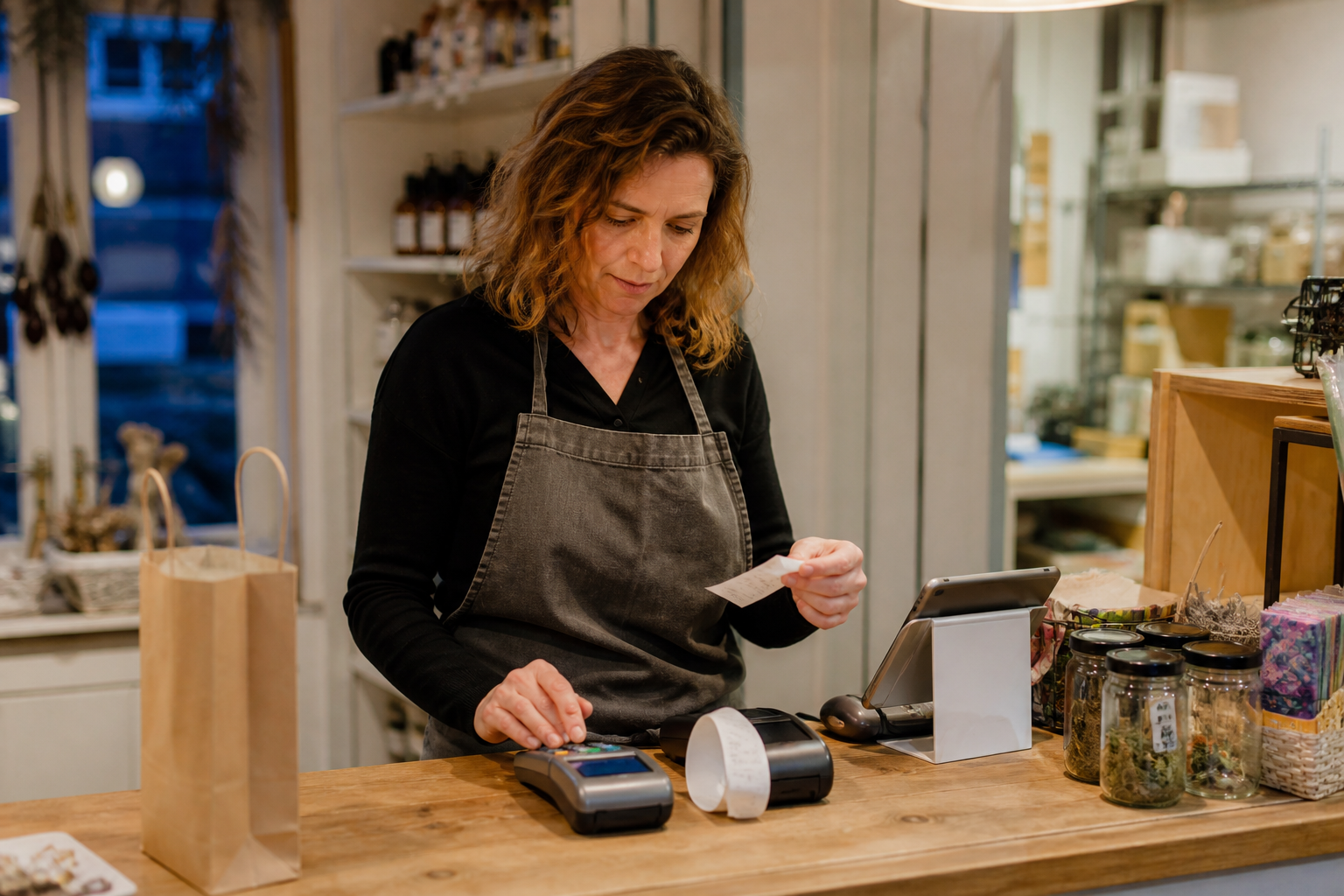
The card machine and phone payments comparison, side by side
Laid out next to each other, the decision usually comes down to how fixed your trading location is and how much you rely on your phone for other things during service.
| Option | Best suited to | What to check |
|---|---|---|
| Dedicated card machine | A fixed till or counter, higher transaction volume | Does it link cleanly to your EPOS? |
| Phone payment reader | Mobile trades, markets, low or occasional volume | Signal reliability and battery life during a shift |
| Both, run together | A fixed base plus occasional off-site work | Whether reporting combines into one place |
Five operational checks before you choose
Before settling the card machine vs phone payments question for your shop, work through these five checks in order.
- How often do you actually take payments away from a fixed counter?
- Is your mobile signal reliable at every location you trade from?
- Do you need the payment to total automatically against your till, or a self-service point such as a kiosk?
- How many transactions do you take on a typical busy day?
- What happens to a sale if the phone or terminal fails mid-shift?
Under the FCA's guidance on payment service providers, both routes carry equivalent consumer protections — the decision is operational, not regulatory.
Where the payment record lands after the customer leaves
Whichever way the card machine vs phone payments decision goes, it rarely sits in isolation. A card machine that reports into First Essential One means one record of every sale, rather than a separate reconciliation step at the end of the day. A phone-based reader used alongside an AI assistant answering calls can make sense for a mobile trade that takes bookings and payments through the same device.
What a card machine or phone reader costs
Cost depends on how the terminal is funded, how many transactions you process, and whether it is bundled with other equipment. We build the package around the business rather than quoting a single figure upfront — the honest starting point is your own approach to invoicing and taking payment from customers, which shapes what any provider should be quoting you against.
A phone reader can look cheaper on paper because there is no separate device to buy, but it is still worth totalling the real cost of relying on a personal phone for business trade — a cracked screen or a dead battery becomes a trading problem, not just a personal inconvenience. A dedicated terminal shifts that risk onto hardware built for the job.
| Cost driver | Why it matters | What to ask |
|---|---|---|
| Transaction volume | Changes which pricing structure suits you | What does a typical week look like? |
| Hardware route | Own outright, rent, or bundle with EPOS | What happens if you want to change later? |
| Contract length | Some routes commit you longer than others | Can you own the terminal outright from day one? |
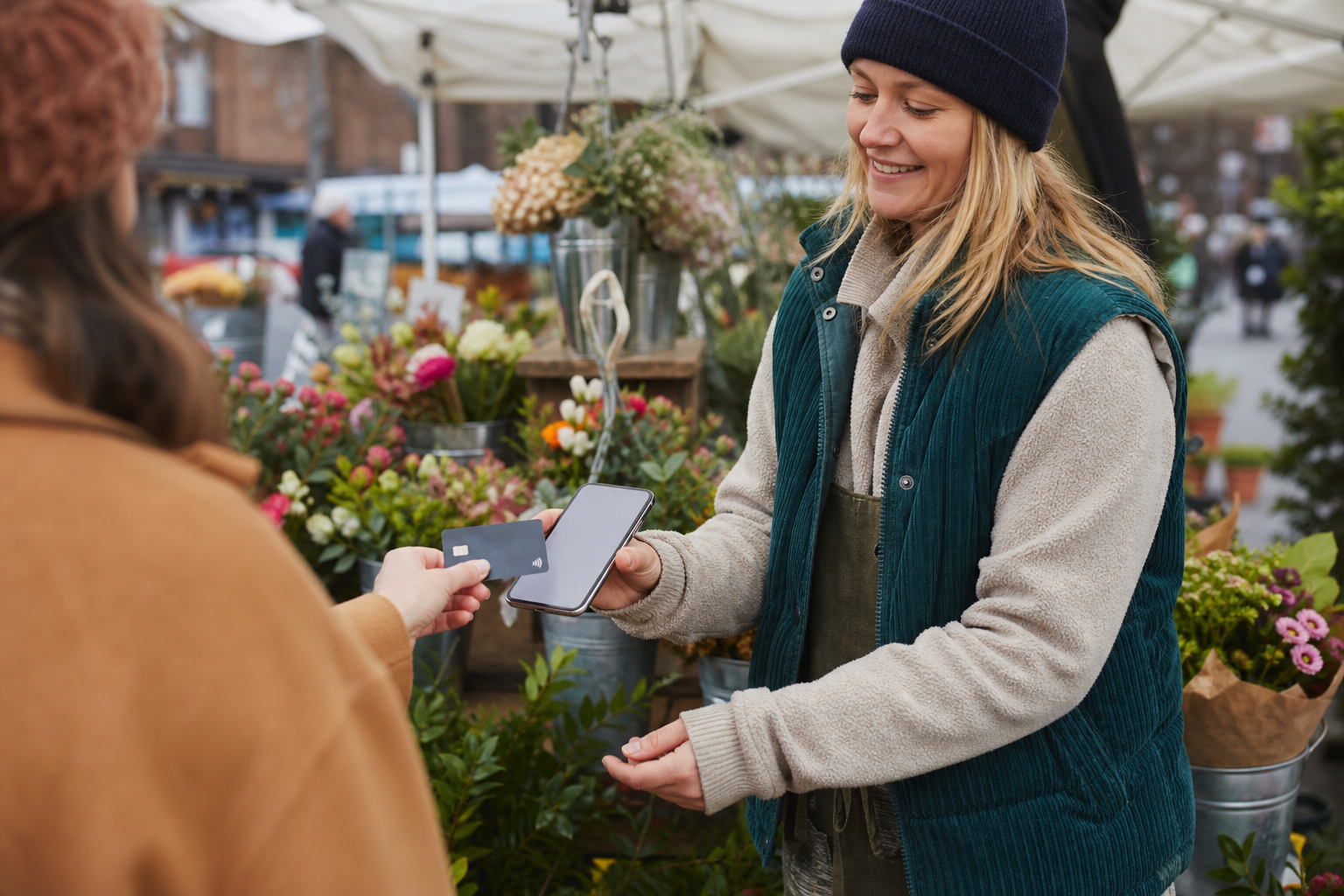
The three payment-route mismatches to avoid
Getting card machine vs phone payments wrong is rarely about the hardware itself — it usually comes down to one of these five avoidable choices.
- Buying a terminal built for a fixed till when most trade actually happens on the move, so it sits unused in a drawer half the week.
- Relying on a personal phone for card machine vs phone payments decisions without checking signal at every trading location first — a market stall on a Tuesday is not the same as a market stall on a Saturday.
- Ignoring how the payment record will reconcile with stock, staff and reporting, which turns a five-minute end-of-day task into a much longer one.
- Choosing on price alone without checking what happens if the device fails mid-service, or how quickly a replacement can actually reach you.
- Assuming a phone reader is automatically cheaper once the ongoing running costs of using a personal device for business are added up.
Signs you've outgrown a single option
- You are carrying a phone reader into a shop that now has a permanent counter and a queue at busy times.
- A single terminal queues customers at peak times, and staff are asking for a second one.
- You are manually copying phone-reader sales into your till records instead of them appearing automatically.
- You have opened a second trading location with different needs to the first, and the current setup was only ever built for one.
- Staff are improvising a workaround because the current hardware does not match how the business now actually trades.
Protecting customer payment data
Whichever way the card machine vs phone payments choice lands, only capture the information needed to complete the sale, and keep it secure. The PCI Security Standards Council's merchant resources set out the baseline for handling card data safely, and the NCSC's small organisations guide covers the wider device and network security a card machine or a payment-taking phone both depend on.
The UK GDPR and Data Protection Act 2018 apply to any customer information you retain alongside a transaction, such as a receipt email address or a loyalty record.
Choosing between them by business type
Market stalls and mobile trades
A phone reader usually wins here — light, no separate charging routine, and no reason to carry hardware built for a till you do not have. The main planning task is simply checking signal at each pitch before the first trading day, not on it.
Cafes, shops and salons
A dedicated terminal linked to your sector setup usually pays for itself in speed once you are processing more than a handful of transactions an hour. Queue time during a lunch rush or a Saturday morning is where the difference actually shows up, not on a quiet Tuesday.
Multi-site or seasonal businesses
A combination often works best — fixed terminals at a permanent site, phone readers for pop-ups or seasonal trading, reporting into the same multi-site system so nothing is reconciled twice. This is also where a mismatched setup causes the most avoidable admin, because two separate records have to be manually matched at the end of each month.
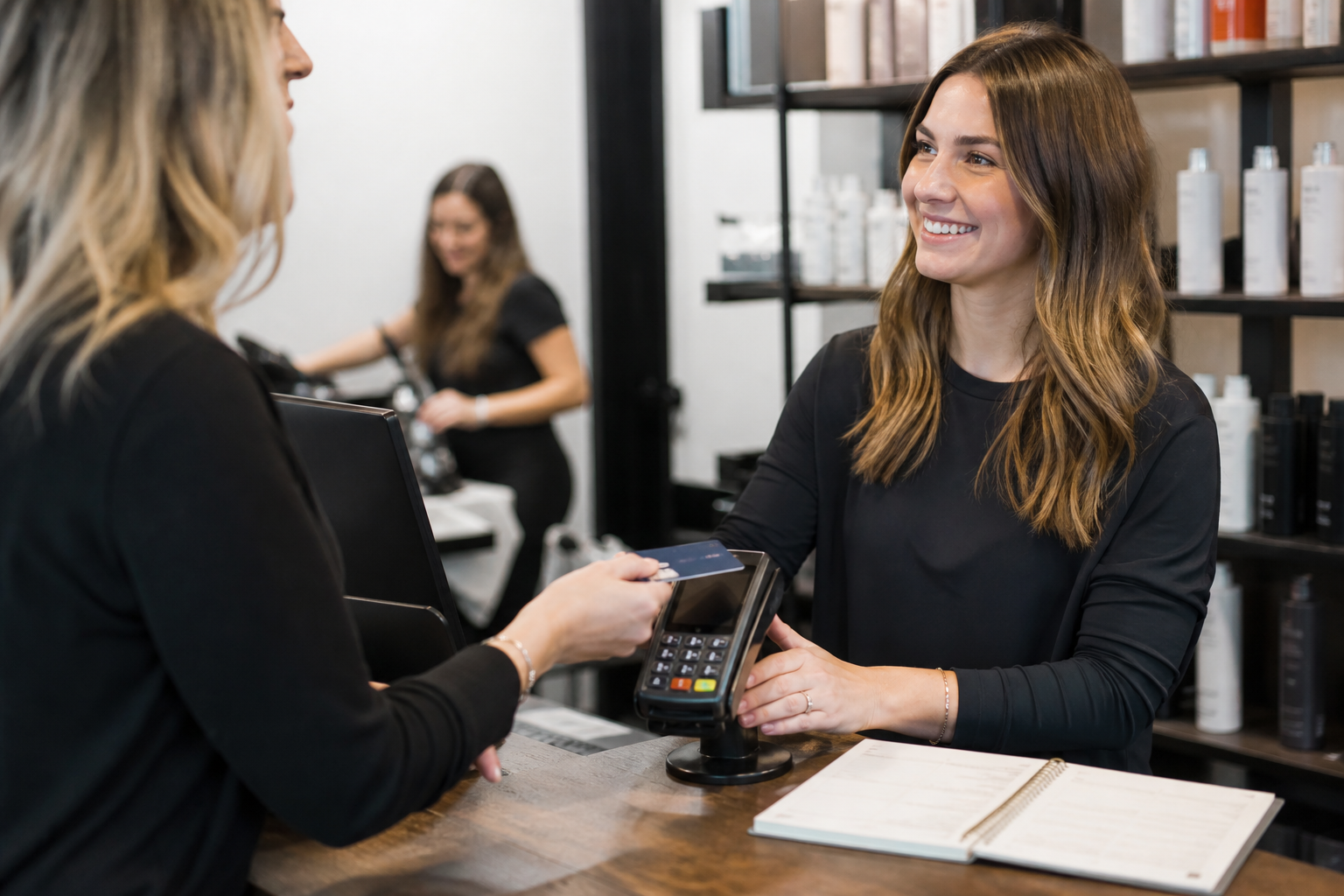
Planning the switch or the add-on
However you land on card machine vs phone payments, a short planning pass avoids most first-week problems.
- Track a normal week and note where every payment is actually taken.
- Test signal reliability at every location before committing to a phone reader.
- Decide whether reporting needs to combine into one place.
- Brief staff before the change, not on the first busy day of using it.
Under the general consumer protection rights that apply to any UK sale, the payment method itself does not change what a customer is entitled to if something goes wrong — so choose on operational fit, not on which option feels newer.
What to measure after the first busy week
Look at how often a sale is delayed by a device issue, how much reconciliation time it adds at the end of the day, and whether staff or customers mention friction. The Citizens Advice guidance on getting money back after a card payment is a useful check on how disputes are actually resolved, whichever hardware took the original payment.
Revisit the card machine vs phone payments decision every few months rather than treating it as a one-off choice — trading patterns change, and the right setup often changes with them.
Questions worth asking before you commit
Ask any provider how the terminal or reader reports into your existing setup, what the fallback is if a device fails, and whether the contract locks you into one route when your trading pattern might change. A good answer is specific to your business, not a general script.
Bring a real week of trading to the conversation rather than a hypothetical one — it gives a much more useful answer than comparing spec sheets. Some of our own published case studies cover exactly this kind of switch, and you are welcome to talk it through with our UK team before deciding anything.
Use a real trading-week test, not a comparison chart
For five working days, note each point at which a customer wants to pay: fixed counter, event, doorstep, treatment room or delivery. Record whether the amount begins in a till, a booking record or a conversation. That immediately shows whether the business needs a terminal at a permanent checkout, a mobile route, or both.
Then test the failure point deliberately. Use the normal signal at the normal location, check the phone battery at the end of a busy shift, and ask a staff member to complete a payment without the owner present. If a sale depends on one person’s personal phone, that is not a small detail; it is the operational risk to solve before choosing. The NCSC’s small-organisation guidance is helpful when setting a sensible device routine.
Finally, look at the record after the sale. If sales from the counter and sales taken away from site need manual matching, decide who will do that and when. A combined point-of-sale setup is valuable when it removes a repeated admin task, not merely because it sounds more advanced.
Key takeaways
- Card machine vs phone payments is a question about where you trade, not which is newer.
- A fixed counter usually favours a dedicated terminal; mobile trade usually favours a phone reader.
- There's no universal right answer to card machine vs phone payments — only the right answer for your own trading pattern.
- Many businesses genuinely need both, reporting into one place.
- Check signal reliability and device dependency before you commit.
Frequently asked questions about card machine vs phone payments
Is a phone payment reader as secure as a card machine?
Both are built to the same industry security standards, so security alone rarely settles card machine vs phone payments either way. The practical risk is device dependency — a phone doing several jobs at once — not the payment method itself.
Can I use both a card machine and phone payments in one business?
Yes. Many businesses run a fixed terminal at their main site and a phone reader for mobile or seasonal work, reporting into one system.
Does a card machine need a permanent internet connection?
Most modern terminals work over mobile data or Wi-Fi, but check reliability at your actual location before relying on it for every sale.
Is a card machine or phone reader better for a sole trader just starting out?
It depends on trading pattern more than business size. Review your own position as a self-employed trader and start with the option that matches how you actually work, not the one that looks most established.
What happens if the device fails mid-sale?
Have a fallback in mind — a second device, or a clear process for taking the customer's details and completing the sale once the issue is resolved.
Do I have to choose one option permanently?
No. Most businesses revisit the decision as trading patterns change — a market trader who opens a permanent unit, or a shop that starts doing markets and pop-ups, usually ends up running both.
Ready to work out which setup suits your shop?
We can map your trading pattern against the right combination of card machine and phone payment options.