
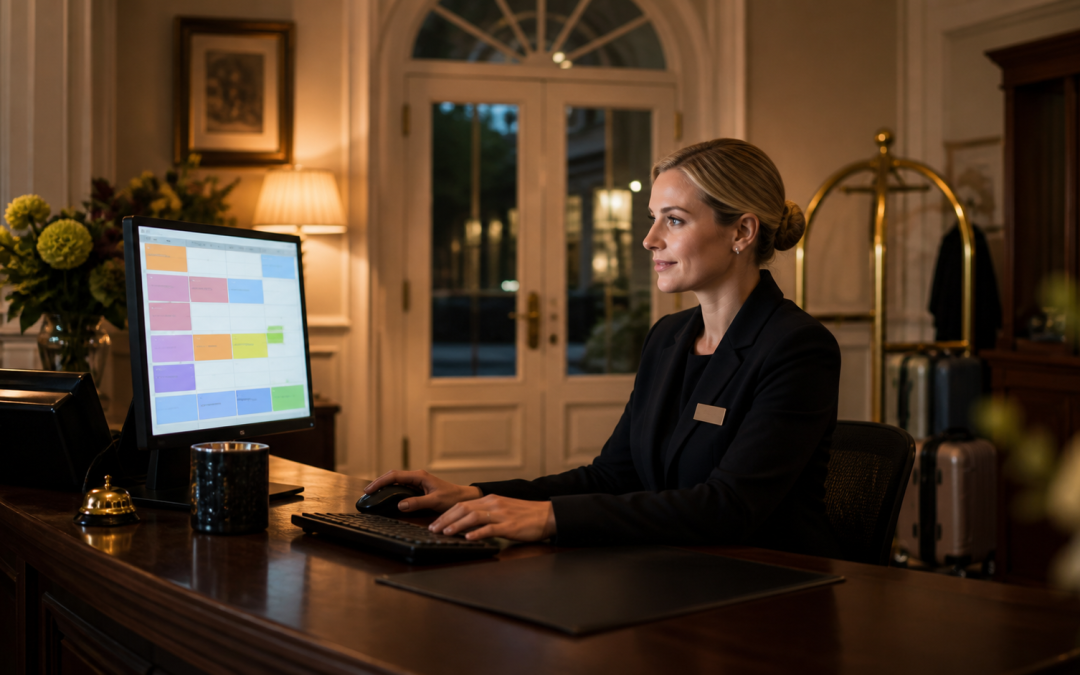
The Essential Guide: Hotels and Holiday Parks — Taking Bookings Out of Hours
A guest deciding to book a room rarely does it during office hours. Hotel booking automation uk properties actually rely on exists precisely because the moment someone decides to stay is usually 9pm on a Tuesday, scrolling on a phone, not 11am when the front desk is fully staffed. A hotel or holiday park that can only take bookings during the day is quietly losing the exact enquiries that happen everywhere else.
Contents
Hotel booking automation uk: what changes after hours
During the day, a phone call or a message gets a reasonably quick reply. After the front desk closes, that same enquiry either waits until morning — by which point the guest may have booked elsewhere — or it needs something else to answer it properly.
Most properties already know this in the abstract, but few have actually measured it. Once you count how many enquiries genuinely arrive between closing time and opening the next day, the scale of the gap tends to be larger than expected.
What genuinely out-of-hours booking needs
Three things separate a system that actually works overnight from one that just looks available.
Live room or pitch availability
A booking form that isn't connected to the real diary just becomes a message to confirm in the morning — which is barely better than no form at all. Worse, a slot shown as available that's actually taken creates a far more awkward conversation than simply not offering online booking at all.
Payment or deposit taken at the point of booking
Taking a deposit in the same step as the booking reduces both no-shows and the awkward morning-after conversation about payment details. It also means the property isn't relying on a guest's memory or goodwill days or weeks later.
A clear, honest AI handover for anything unusual
Special requests, accessibility needs, group bookings — an AI assistant should recognise these and route them to a person the next morning, not attempt to handle everything itself. Trying to automate genuinely judgement-heavy requests is where this kind of technology earns its worst reputation, and it's entirely avoidable with the right scope.
How this plays out for a real guest
A guest browsing late in the evening checks availability, sees real dates, books a room or pitch, pays a deposit, and gets a confirmation — all before the front desk opens again. That's an actual booking secured, not a message waiting to be actioned hours later when a competitor may already have taken it.
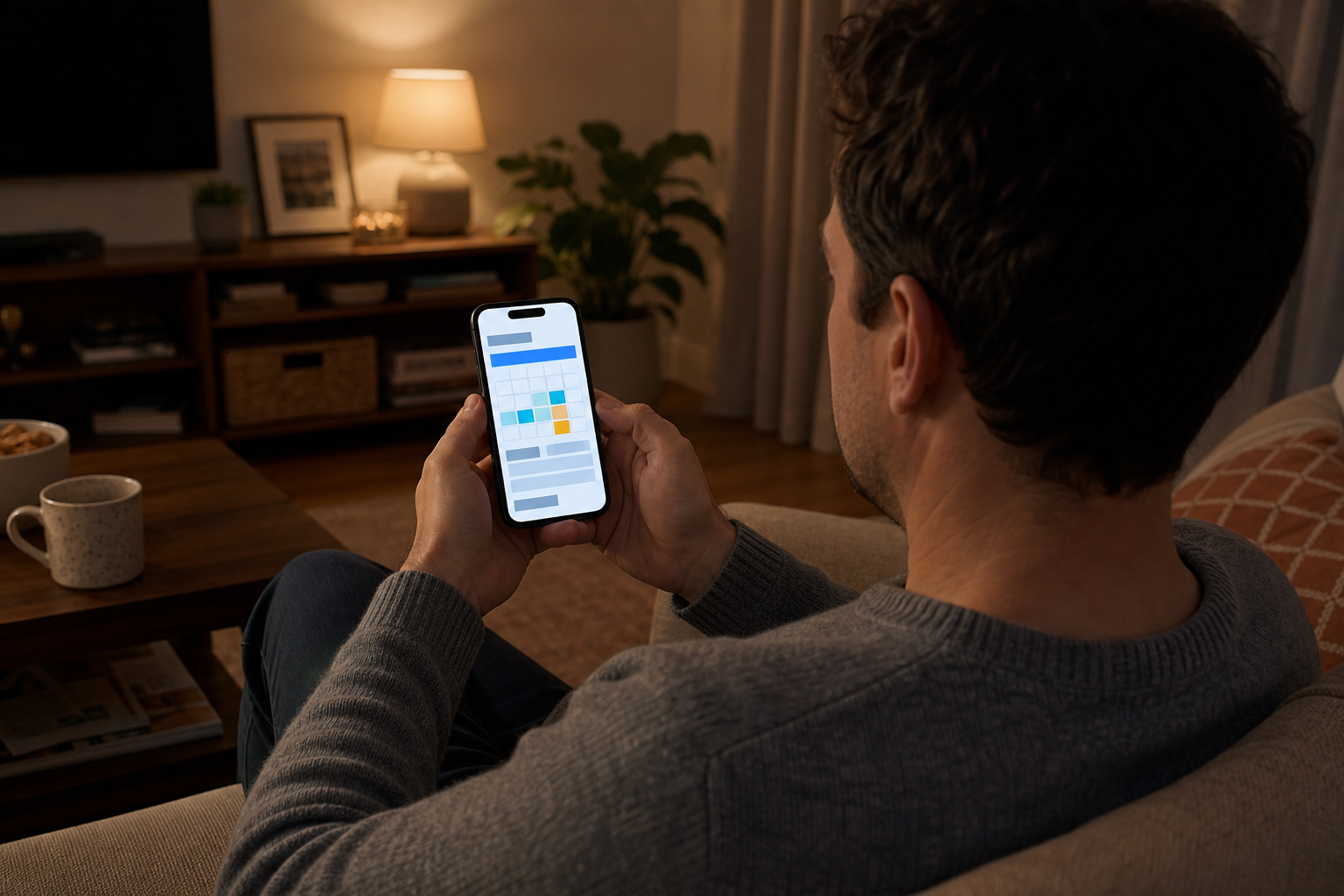
Front desk hours vs automated booking, compared
| Approach | Covers | What to check |
|---|---|---|
| Front desk hours only | Daytime enquiries and walk-ins | How many enquiries arrive outside these hours? |
| Booking form, no live availability | Collects a request | Still needs manual confirmation the next day |
| Hotel booking automation uk properties can trust | Round-the-clock live booking and payment | Does it hand over cleanly for anything unusual? |
What to check before setting this up
- Does the system show genuinely live availability across every room type or pitch?
- Can a guest pay a deposit or in full during the booking itself?
- What happens with a special request — is it flagged for a person, or ignored?
- Does an overnight booking update the same system the front desk uses in the morning?
- How clearly does any AI assistant disclose that it's an AI, not a person?
How this connects to the rest of your setup
Out-of-hours booking works best connected to your guest and booking records, deposit and payment processing, and an AI assistant that can answer routine questions by phone or chat using the same live availability the website shows.
The booking website itself is the foundation this all sits on, and for a property that also takes walk-in guests, the same till or check-in system should ideally share the same guest record rather than running separately.
What this actually costs a hotel or holiday park
Cost depends on how many rooms or pitches need managing and how much of the guest journey — booking, deposit, confirmation, reminders — needs automating. We build the package around your actual occupancy pattern, not a generic template.
Where deposits are taken, the same FCA guidance on payment service providers and PCI Security Standards Council rules apply exactly as they would to any other payment channel. The Payment Systems Regulator's consumer information covers how that deposit actually moves once a booking is confirmed.
Common mistakes when automating hotel bookings
Most hotel booking automation uk problems trace back to one of these five avoidable mistakes.
- Adding a booking form that isn't actually connected to live room or pitch availability.
- Taking bookings but not deposits, leaving no-shows unaddressed overnight.
- Letting an AI assistant attempt special requests instead of flagging them for a person.
- Running website and phone bookings as two disconnected systems that don't share data.
- Launching without testing the entire overnight flow as a genuine guest would experience it.
- Assuming overnight demand is too small to matter without ever actually measuring it.
Signs your current setup is losing overnight bookings
- Morning staff regularly find enquiries that arrived hours earlier, unanswered.
- Guests mention trying to book late and giving up because nothing responded.
- No-shows are common on bookings taken without any deposit at all.
- Nobody can say, without checking, how many enquiries actually arrive out of hours.
- A competitor property seems to be winning late-evening enquiries that used to come to you.
Protecting guest data overnight
Guest details, payment information and any accessibility notes all carry the same obligations at 2am as they do at midday. The UK GDPR and Data Protection Act 2018 apply throughout, and the NCSC's small organisations guide covers the account security an unattended booking system depends on overnight.
Hotel booking automation uk by property type
Small independent hotels and B&Bs
Every room matters more here — a single missed overnight booking is a larger proportional loss than for a bigger property, and there's often no dedicated night staff to catch what an automated system misses.
Holiday parks and campsites
Pitch availability changes constantly through a season, so live, accurate availability matters even more than for a fixed room count. A pitch shown as free that's genuinely taken creates a far worse arrival-day experience than a slower, honest booking process.
Multi-site hospitality groups
Consistent overnight coverage across every property avoids one site quietly underperforming while others handle it well. Without a shared system, it's easy for one property's overnight gap to go unnoticed for months.
Planning the rollout
Rolling out hotel booking automation uk guests can actually rely on takes a short, deliberate sequence rather than switching everything on overnight.
- Track how many enquiries genuinely arrive out of hours over a normal fortnight.
- Decide the deposit policy before advertising round-the-clock booking.
- Test the overnight flow as a genuine guest would, phone in hand, late in the evening.
- Brief morning staff on how overnight bookings appear in their system.
Under the general consumer protection rights that apply to any UK sale, a booking made at 2am carries the same obligations as one made at the front desk — build confirmation and cancellation with that in mind.
How to judge whether it's working
Track the proportion of bookings arriving out of hours, and whether deposits genuinely reduce no-shows. The Citizens Advice guidance on resolving a purchase gone wrong is a useful reference for how disputes get handled, whatever time the booking was made.
Give it a full season, not just a few weeks, before judging fully — booking patterns for hospitality shift considerably between quiet and peak periods, and a short trial rarely captures both.
Questions worth asking a provider
Ask exactly what an AI assistant is approved to say overnight, and how cleanly it hands unusual requests to a person the next morning — the ASA's guidance on AI disclosure is a useful reference point on the underlying principle even outside advertising specifically. If a dedicated booking phone line is part of the plan, Ofcom's phone numbers guidance is worth checking too.
Some of our published case studies and our insights hub cover this kind of setup — talk to our UK team if it's easier to walk through your own booking pattern directly.
Build the after-hours route around real requests
List the enquiries that arrive after reception closes: a new booking, a change to an existing stay, an accessibility question, a late-arrival message or a request for local information. Give each one a clear route. Routine information can be answered immediately, while an exception should create a visible task for the next available person.
Test the route from the guest view. Confirm the confirmation message arrives, the booking details are correct and a member of staff can see what was promised the next morning. The purpose is not to make a hotel appear permanently staffed. It is to make sure a guest receives a useful answer and the team starts the day with clear information.
Protect the arrival experience
Hotels and holiday parks need an out-of-hours route that does not leave a guest guessing at the gate or reception door. Confirm the information a late-arrival guest actually needs: arrival instructions, safe access, parking, who to contact if there is a problem and what cannot be changed overnight. Keep exceptional cases visible for the morning team.
Run a test with a genuine booking journey. Check that the confirmation, reminder and staff record agree. If a guest needs a person, make that escalation clear. Automation should reduce routine work, not make an exhausted traveller work through a confusing set of messages.
Keep the overnight plan visible to staff
At the start of each day, review arrivals, messages that need a human answer and any booking exception. Give one person responsibility for clearing the overnight queue. This makes the after-hours route a reliable part of reception work rather than a separate system that is only checked when there is a problem.
Give the morning team a usable handover
An overnight booking route only works if the first person on duty can see what needs attention. Create a compact morning list: new bookings, requests that could not be confirmed automatically, accessibility notes and messages that need a human reply. Each item needs an owner and a clear status, not just an inbox label.
Review the list at the same point every day during a busy period. This catches a booking that needs a call back before the guest arrives and helps the team spot repeated questions that should be answered more clearly on the website. Good after-hours service is not about pretending nobody is asleep; it is about making the next response dependable.
In day-to-day terms, hotel booking automation uk should solve a real operational problem rather than add another feature for the team to manage.
Before deciding, test hotel booking automation uk against a normal busy day and the exceptions that make work harder.
Key takeaways
- Hotel booking automation uk properties benefit from covers the hours a front desk genuinely can't.
- Live availability, a deposit at booking, and a clean AI handover all matter together.
- Most missed revenue happens quietly, overnight, and is easy to underestimate without checking.
- Test the entire overnight flow as a real guest would before relying on it.
Frequently asked questions about hotel booking automation uk
Will guests trust an AI assistant to take a booking overnight?
Most will, provided it clearly discloses itself as an AI and hands anything unusual to a person promptly — UK rules require that disclosure regardless.
Do I need to redesign my whole booking process to add this?
Not always — many existing booking systems can have live availability and deposit-taking added without a full rebuild.
What happens to a special request made at 2am?
It should be captured clearly and flagged for a person to review first thing, not guessed at or ignored by the system.
Is this worth it for a small property with few rooms?
Often yes — a small property has the least room to absorb a missed overnight booking, proportionally, and usually has no dedicated night staff to catch what falls through.
How quickly can hotel booking automation uk be set up?
Most properties can have live availability and deposit-taking running within a few weeks, once the booking journey is properly mapped against real occupancy patterns.
Ready to stop losing bookings after the front desk closes?
We can map your occupancy pattern and show you what overnight booking could actually capture.