
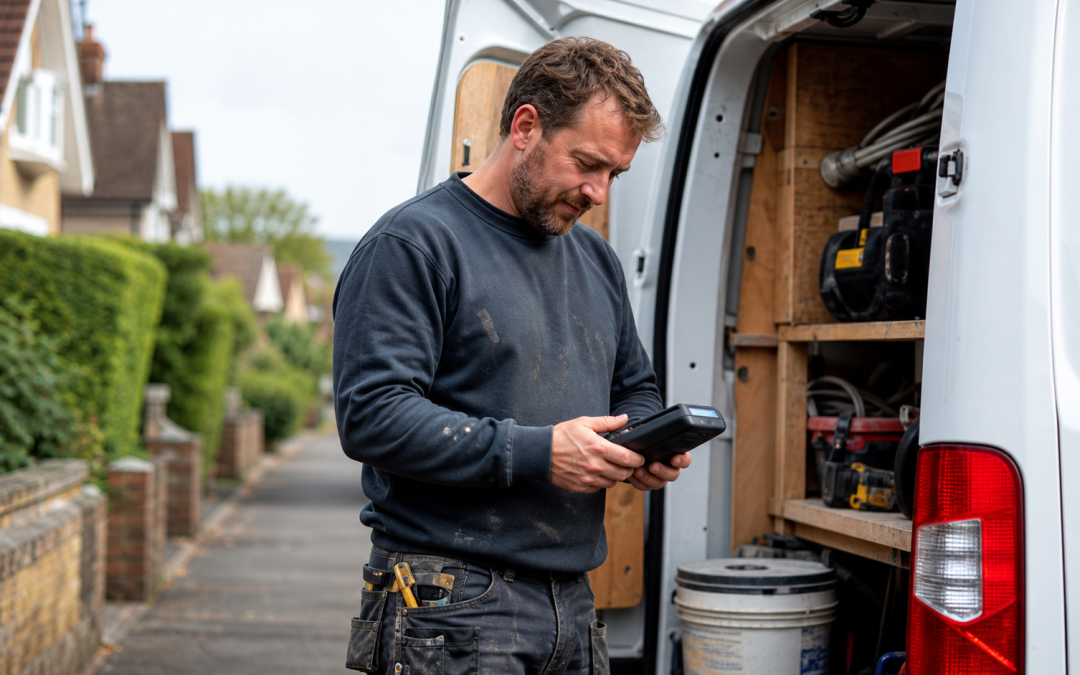
The Essential Guide: Trades in West Sussex — Getting Paid on the Job
Ask any plumber, electrician or builder working across West Sussex what actually slows down getting paid, and the answer is rarely the work itself — it's the awkward gap after the job's done, waiting on a bank transfer that might arrive tomorrow, or might not. Card payments for tradesmen sussex based trades actually use solve that gap directly, at the point the job finishes, not days later.
That gap isn't a minor inconvenience. For a sole trader or small team, cash flow depends on money actually arriving on schedule — a string of slow payers can genuinely strain a business that looks perfectly healthy on paper.
Contents
Card payments for tradesmen sussex trades actually rely on
A trade working across Worthing, Horsham, Crawley or the wider county rarely has a fixed counter to take payment at — the "till" is whatever fits in a van. That changes what actually matters: portability, reliability without a fixed internet connection, and speed at the exact moment a customer wants to pay and move on.
Why cash and bank transfer alone fall short
Cash requires the customer to have it, which fewer do by the day. A bank transfer relies on the customer remembering to actually send it once you've left the job — and chasing that days later costs more time and goodwill than taking payment on the spot ever would.
Chasing an unpaid transfer is also an awkward conversation nobody enjoys having, especially with a customer you may want repeat work from. Taking payment before you leave removes that conversation entirely.
What actually matters for a mobile trade
Three things separate a genuinely useful setup from one that looks good on paper.
A reliable signal, not just a working device
A mobile card reader is only as good as the signal at the actual job site — rural parts of West Sussex can be patchy, so this matters more here than in a town centre.
Speed at the moment the job ends
A customer standing on their doorstep wants to pay and be done — a slow or fiddly payment process undoes the good impression the finished work just created.
A record that doesn't need re-entering later
Payment taken on site should flow straight into invoicing and accounts, not get copied out by hand back at the yard that evening.
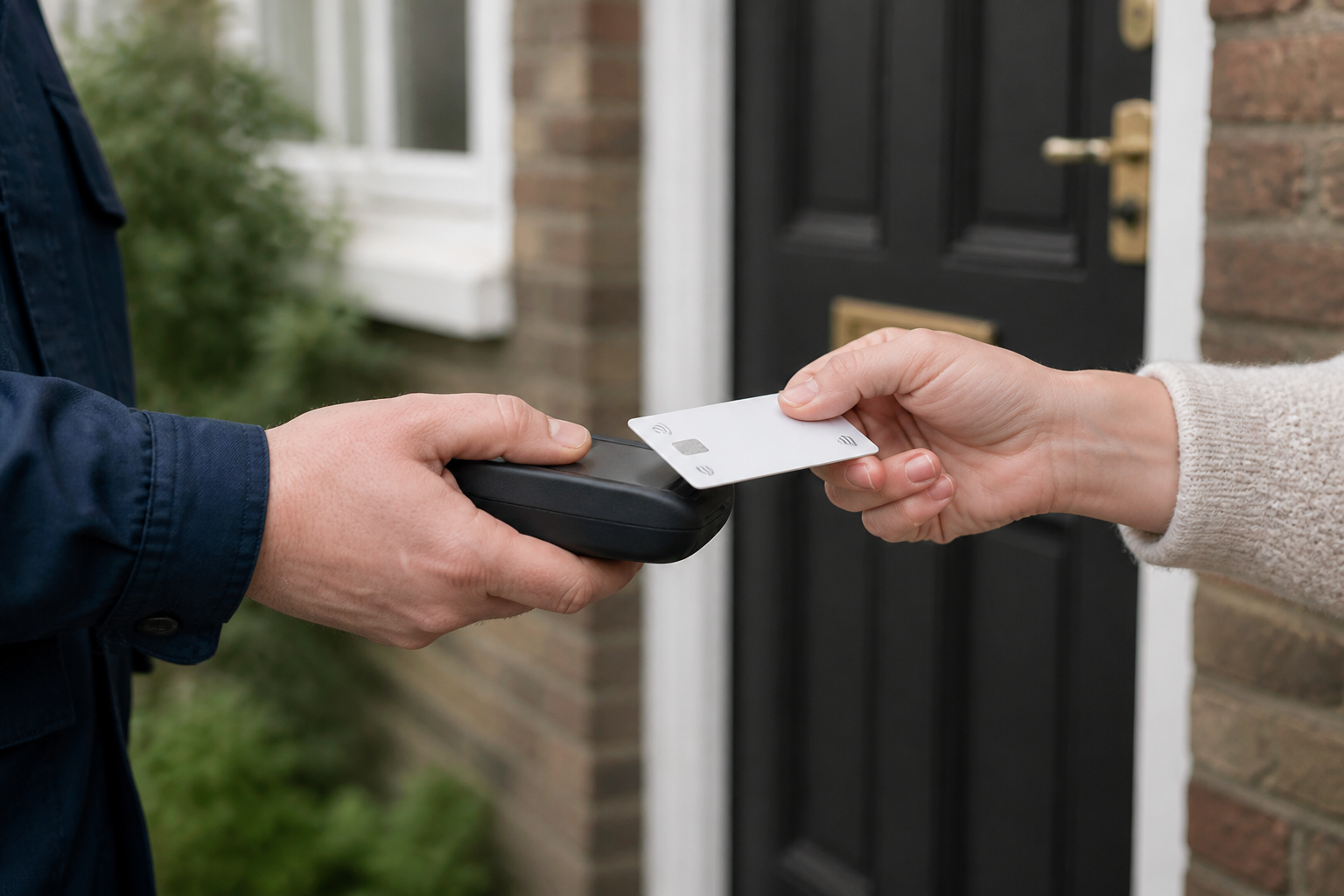
Cash vs transfer vs card, compared
| Method | Speed | What to watch |
|---|---|---|
| Cash | Instant, if the customer has it | Fewer customers carry enough cash today |
| Bank transfer | Depends entirely on the customer remembering | Chasing unpaid transfers costs real time |
| Mobile card payment | Instant, taken before you leave | Signal reliability at the actual job site |
What to check before choosing a mobile payment setup
- Does the reader work reliably in the parts of Sussex you actually cover, not just in town?
- How long does a transaction take from tap to confirmation?
- Does the payment record link automatically to your invoicing, or need copying out later?
- What happens if a job runs into a no-signal area — is there a fallback?
- Is the device genuinely portable enough to carry between jobs all day?
How this connects to the rest of your setup
Payment is only one part of running a trade business — a mobile card reader works best linked to quoting, invoicing and customer records, and an AI assistant can help answer routine enquiry calls while you're on a job with your hands full. A simple website that lets a customer request a quote online also feeds the same pipeline as calls and word of mouth.
For a trade with a fixed workshop or showroom alongside mobile jobs, the same till system that handles counter sales should ideally share records with whatever takes payment out on site, rather than running as two disconnected systems.
What it actually costs a tradesperson
Cost depends on transaction volume and whether payment is bundled with wider invoicing tools. We build the setup around how a trade actually works — mobile first, not a shop counter retrofitted for a van.
The same FCA guidance on payment service providers and PCI Security Standards Council rules apply to a mobile card reader exactly as they would to a shop till. The Payment Systems Regulator's consumer information covers how that payment actually moves once a job is complete and paid for.
Many trades operate as a self-employed sole trader, where cash flow gaps caused by slow-paying invoices matter even more — there's no separate finance team absorbing the delay while you wait.
Common mistakes tradespeople make with payment
Most card payments for tradesmen sussex trades regret setting up wrong trace back to one of these five avoidable mistakes.
- Relying entirely on invoicing after the fact instead of offering payment on the spot.
- Choosing a card reader without checking signal reliability across the actual areas covered.
- Not linking payment records to invoicing, creating extra admin back at the yard.
- Assuming customers will always have cash, when fewer genuinely do each year.
- Underestimating how much unpaid or slow-paid invoices actually cost in chasing time.
Signs your current payment setup is costing you
- You're regularly chasing invoices more than a week after a job's finished.
- Cash-only jobs are becoming harder to arrange with newer customers.
- Evening admin includes manually copying payment details into the books.
- A customer has mentioned wanting to pay by card when you couldn't offer it.
Protecting customer payment data on the job
Whichever device takes payment, only capture what's genuinely needed for the transaction. The UK GDPR and Data Protection Act 2018 apply to any customer details kept alongside a job record, and the NCSC's small organisations guide covers the account security a mobile payment app depends on.
Card payments for tradesmen sussex by trade type
The right setup looks slightly different across the trades we work with, though the underlying need — getting paid on the spot, reliably — stays the same throughout.
Plumbers and electricians
Emergency callouts especially benefit — a customer relieved a problem's fixed is far more likely to pay immediately than to remember a transfer later that evening.
Builders and larger jobs
Staged payments through the job, taken by card at each milestone, keep cash flow steadier than waiting for one large payment at the very end.
Gardeners and maintenance trades
Regular, recurring customers benefit from a quick, consistent payment routine every visit, reducing the admin of running a tab across a whole season. A card payments for tradesmen sussex setup that handles repeat visits smoothly saves real admin time over a full year of regular customers.
Planning the switch to card payments
Setting up card payments for tradesmen sussex trades can actually rely on takes a short, deliberate sequence rather than buying the first reader you find.
- Test signal reliability across the actual areas you regularly work in.
- Decide your policy — full payment on completion, or staged for larger jobs.
- Tell existing customers about the new option before the next job, not mid-visit.
- Check the payment record links cleanly to your invoicing from day one.
Under the general consumer protection rights that apply to any UK sale, how a customer pays doesn't change what they're entitled to — clear, upfront pricing matters regardless of payment method.
How to judge whether it's working
Track how much faster payment actually arrives compared with invoicing, and how much chasing time disappears. The Citizens Advice guidance on resolving a purchase gone wrong is a useful reference for how payment disputes get handled fairly, whichever method was used.
Give it a few weeks across a genuine mix of job types before judging — a single large job paid promptly doesn't tell you as much as how the setup performs across a normal working month.
Questions worth asking a provider
Ask specifically about coverage across the parts of Sussex you actually work in, not a generic national claim. A quick check of the Companies House register also tells you how long a provider has genuinely been trading before you commit to any hardware.
Some of our published case studies and our insights hub cover local trades directly — talk to our UK team, based in Worthing, if it's easier to walk through your setup in person.
Plan for the job, not just the payment
Trades businesses need a payment process that fits the work: a quote, a visit, a change to the job, proof of payment and a clear follow-up. Test the route from the customer view and the office view. A customer should know what they are paying for, while the business should be able to match the payment to the correct job.
Keep practical records of approvals, invoices and any change in scope. This reduces awkward calls after the work is complete and gives the team a reliable starting point if the customer needs an update.
Match the payment route to the job record
For a trades business, the payment record should point back to the actual work: the customer, quote or invoice, date, site and any agreed change. This helps when a customer calls months later and also makes it easier for someone in the office to see what is still outstanding. Avoid a process where payment evidence is stored in one place and job information only in a personal message thread.
Test the route for deposits, final payments, refunds and a job that changes after the original quote. The right process gives the customer a clear explanation and gives the business enough evidence to answer a query without searching across several systems.
Use exceptions to improve the workflow
When a trades job changes, record who agreed it, what changed and what the customer now expects. A short exception note is more useful than a long message trail. Review a few examples each month to see whether quotes, job updates or payment requests need clearer wording.
Finish each job with a clear record
Before leaving a site, make sure the job record says what was completed, what remains open and who agreed any change. If payment is requested later, that record gives the customer and the office the same version of events. It also stops a quick phone conversation becoming the only evidence for a variation or a return visit.
A practical end-of-job routine can be short: confirm the work, take any agreed note or photo, update the customer contact details, then send the next payment or follow-up step from the same record. The aim is not more administration. It is to avoid chasing information after the customer has already moved on.
In day-to-day terms, card payments for tradesmen sussex should solve a real operational problem rather than add another feature for the team to manage.
Before deciding, test card payments for tradesmen sussex against a normal busy day and the exceptions that make work harder.
Review card payments for tradesmen sussex again whenever the team, customer journey or workload changes.
Key takeaways
- Card payments for tradesmen sussex based trades rely on need to work reliably away from a fixed counter.
- There's no single right setup — only the one that matches how and where you actually work.
- Signal reliability across your actual working area matters more than any single feature.
- Payment taken on the spot beats chasing an invoice days or weeks later.
- Link payment records to invoicing so evening admin isn't duplicating the day's work.
Frequently asked questions about card payments for tradesmen sussex
Do I need a strong signal everywhere I work?
Most modern readers work over mobile data reasonably well, but it's worth testing in the specific rural or low-signal areas you regularly cover.
Can I take a deposit before starting a job, not just payment at the end?
Yes — many tradespeople take a deposit for materials upfront and the balance on completion, both through the same mobile setup.
Is card payment worth it for small, low-value jobs too?
Often yes — the time saved not chasing a small unpaid invoice usually outweighs any per-transaction cost.
What if a customer still wants to pay by cash?
Card payment doesn't have to replace cash — most trades offer both and let the customer choose on the day.
Does this work for a one-person operation, or only bigger trade businesses?
It works particularly well for a sole trader — with nobody else to chase invoices on your behalf, getting paid on the spot matters even more than it does for a larger team.
Ready to get paid on the job, not weeks later?
We can set up mobile card payments that fit how you actually work across Sussex.